

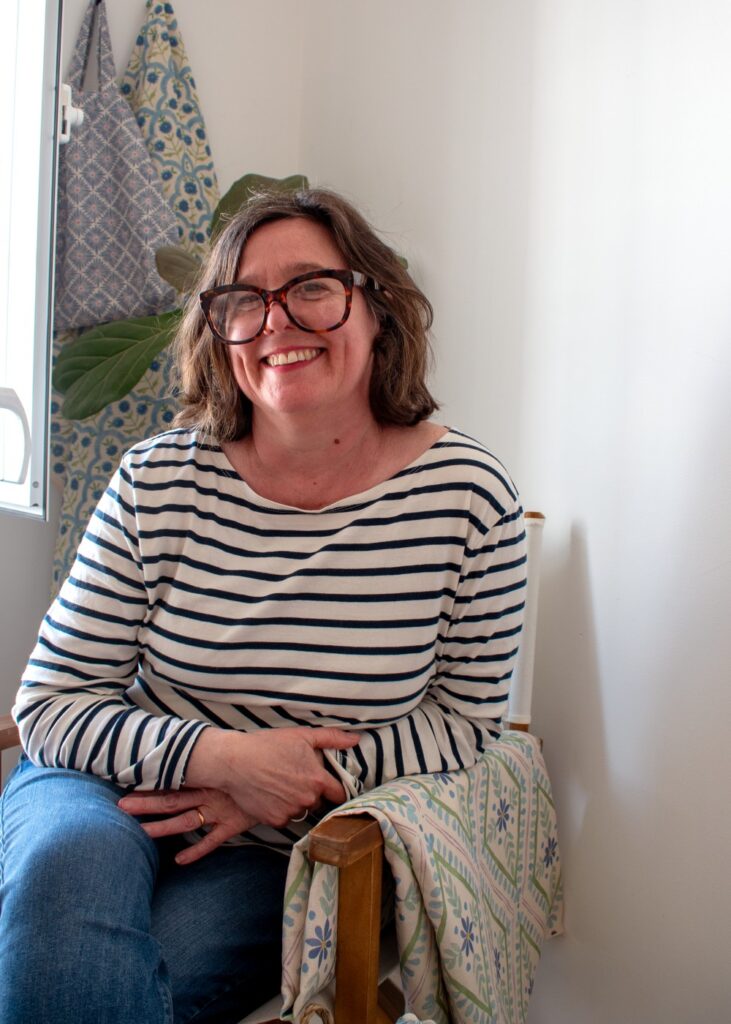
Cotswold textile designer Sarah Hardaker creates fabrics that feel instantly at home within an interior. From hand-painted linens to deeply personal bespoke commissions, her work is rooted in instinct, craftsmanship, and a gentle understanding of how we live.
The Cotswolds has long drawn creative people and for textile designer Sarah Hardaker, it offers both a setting and a way of working—calm, considered, and rooted in place.
We meet in her country kitchen in Amberley, over tea and homemade biscuits, where sketches and fabric swatches sit comfortably alongside the rhythms of daily life. Her work, like the setting, feels thoughtful and unhurried.
The Early Weave
Born and educated in Lancashire, Sarah went on to study textiles in Manchester before embarking on a career in design.
Her creativity can be traced back to childhood. Her father—one of nine siblings—was quietly inventive, reupholstering sofas and handcrafting Paddington Bear-style duffel coats for the entire family. That spirit of making left a lasting impression.
At university, Sarah’s distinctive approach began to attract attention. By graduation, she had been selected to exhibit at New Designers at the Business Design Centre in Islington, where leading figures from across the industry gather to discover emerging talent. Sarah’s work was quickly spotted earning her the New Designers Textile Award, sponsored by Habitat.
Also among those drawn to her work was Anthony Little of Osborne & Little, who awarded her the runner-up prize in the company’s sponsored award. His response would prove pivotal. Inviting her to meet the following Monday, he offered her a role as a print designer. Sarah, characteristically modest, initially hesitated, insisting she didn’t see herself as a print designer—even attempting to talk him out of it. Undeterred, he simply replied: “Come and see me on Monday, and we’ll make you one.”
She accepted, though the quiet sense of imposter syndrome lingered for many years to come.
Around the same time, she spent three formative weeks in Jaipur as part of the Habitat Prize, working alongside Indian design teams in their factories. Immersed in embroidery and hands-on making, she discovered a side of the process that felt instinctive, grounding, and deeply fulfilling.
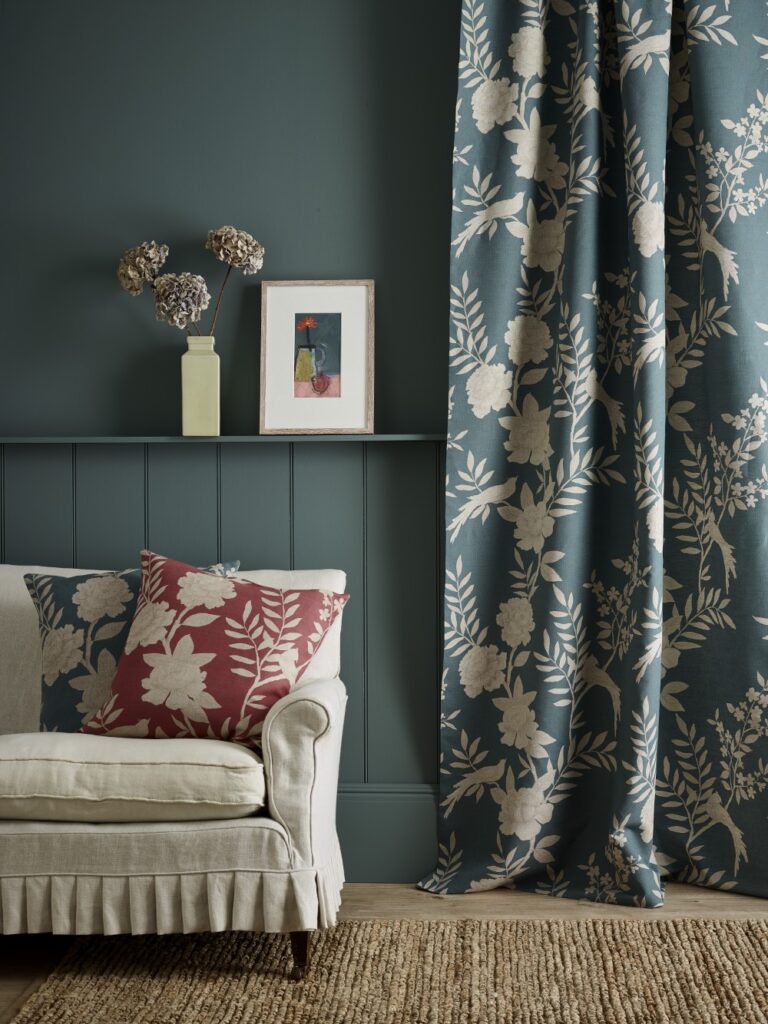
Sarah went on to design one of Osborne & Little’s best-selling collections, Lamorna, named after the Cornish village. Hand-painted onto unbleached linen using watercolour, she describes it as “quite country and whimsical”—a subtle departure from tradition, and perhaps a precursor to her eventual move from London to the Cotswolds.
First Threads
As she prepared to leave London, Sarah began freelance work with Next, designing soft furnishings—from cushions and rugs to curtain fabrics. The role took her frequently to India, but over time, the demands of travel led her to seek a slower pace.
That shift brought her to fabric and wallpaper designer, Harlequin, where her work evolved into designs that were “expressive and easy to live with.” Her Notebook collection, with its fluid watercolour style, reflected an instinct that continues to guide her today: focussing not just on how something looks but how it ‘lives’ within a home.
Her best designs still begin this way—by imagining where a fabric will sit and how it will be used. This thinking now underpins much of her bespoke work. Working directly with clients, often in their homes, she helps those hesitant about colour introduce it with confidence, or creates one-off fabrics based around a much-loved chair or treasured piece of furniture.
It’s a process grounded in context – considering scale, colour, and cloth simultaneously and it’s this practical imagination that gives her work its ease and longevity.
Where Vision Meets Venture
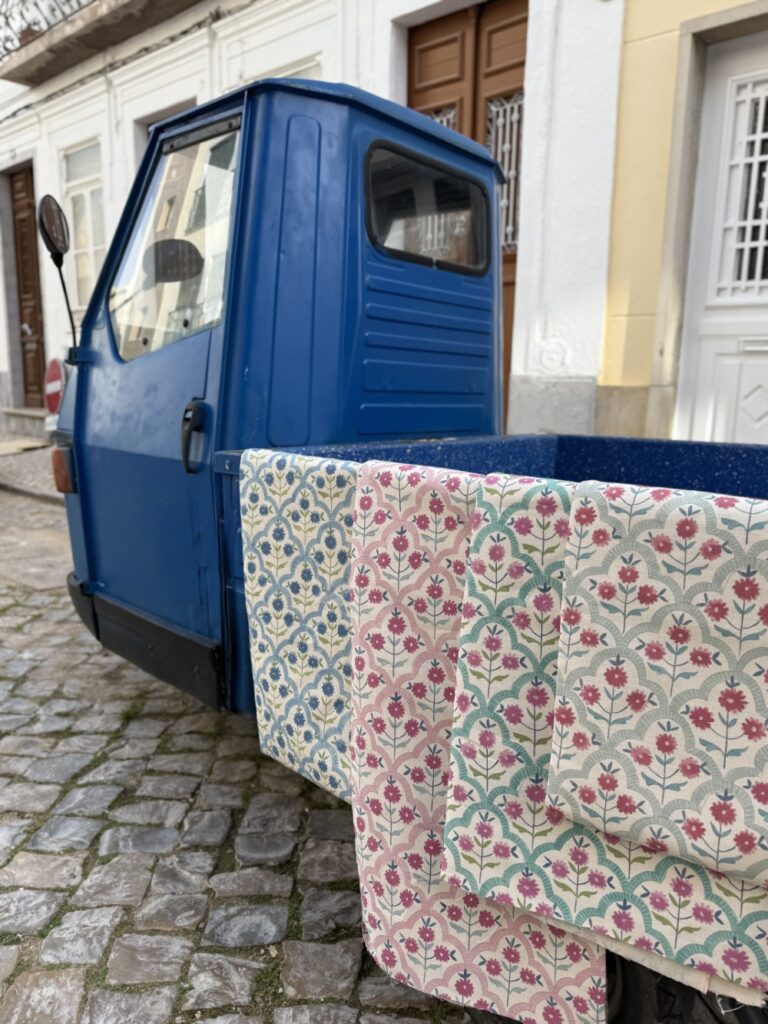
In 2003, Sarah took the leap to work for herself, designing and producing her own fabrics from her studio in Amberley.
Drawing on relationships built over years in the industry, she contacted a Scottish weaver she had met during her time at Osborne & Little and asked for a 50-metre roll to experiment with digital printing. It was an unassuming beginning—but the start of something entirely her own.
From those early designs, her business has grown steadily and organically. She has chosen to keep it small and personal, valuing quality and connection over scale.
Alongside her core collections, bespoke work remains especially important to her. These one-off pieces, as she puts it, give people “something special to live with” – designs that bring a small moment of joy each time they are seen.
The Method in the Making
Sarah’s process often begins with something personal—a favourite painting, an image, or an object that holds meaning. From there, it becomes a continuous act of observation and recording.
She always carries a sketchbook, filling it with fragments of ideas, colour combinations, and passing thoughts. “I always have some kind of mental doodle going on,” she laughs.
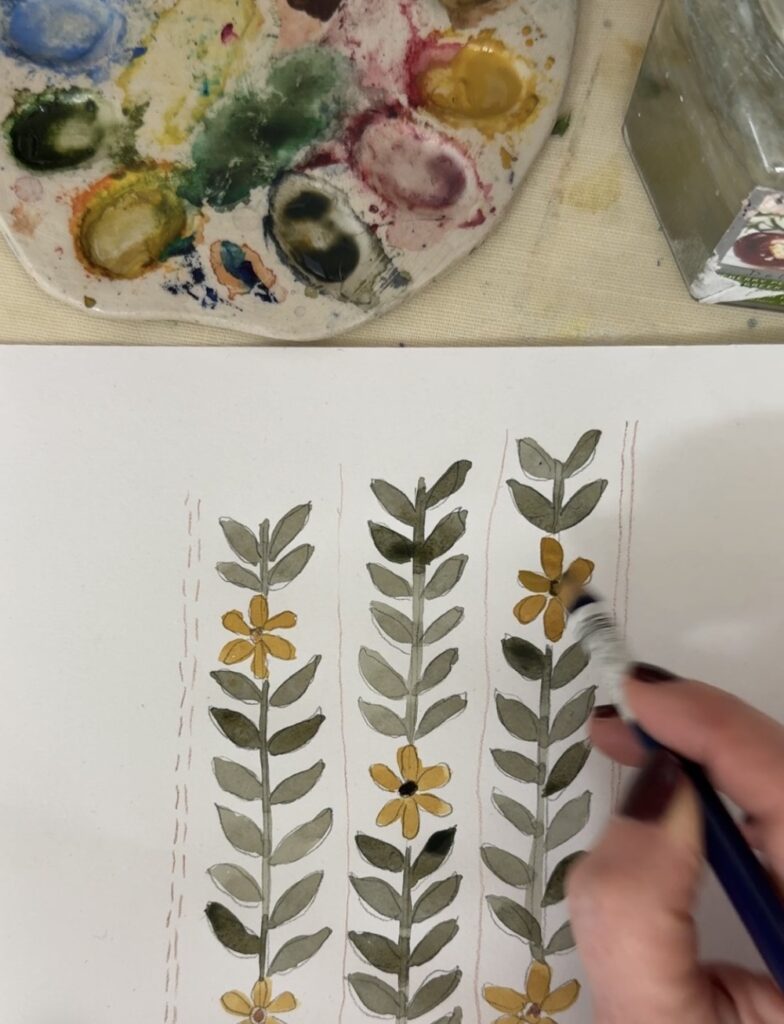
These ideas are then explored physically: drawn directly onto fabric or painted with ink and watercolour. This allows her to immediately understand how a motif might translate into textile form.
Alongside this instinctive creativity is a strong practical awareness. She is always considering how a design will live in a space—whether as curtains, a headboard, or across an entire interior—ensuring it remains versatile and enduring.
The Wider Weave
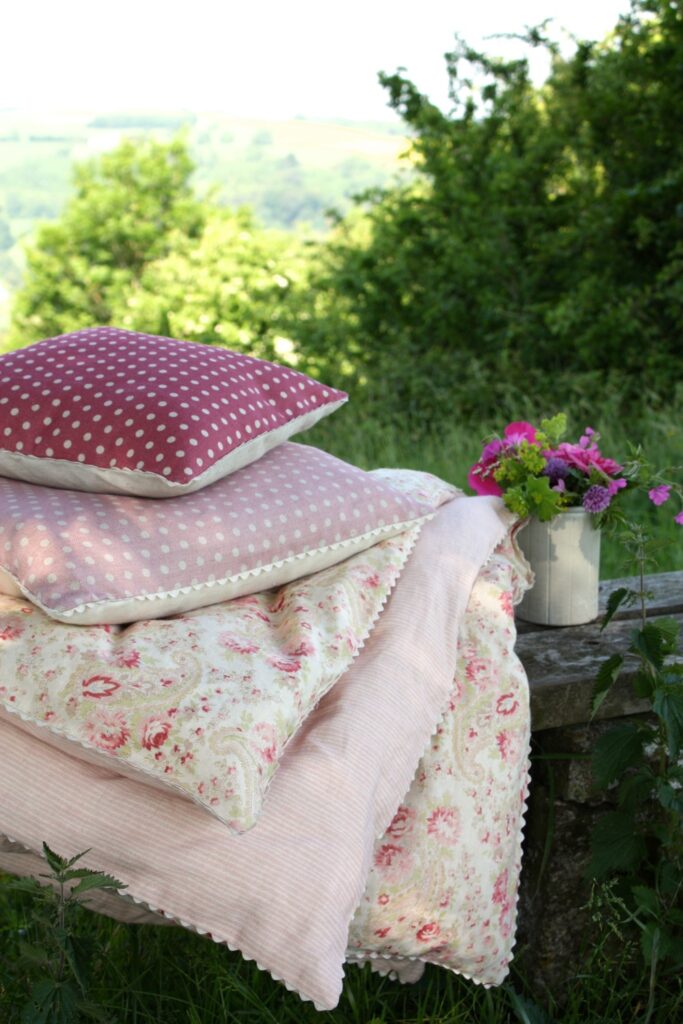
Sarah designs with the bigger picture in mind, considering how each piece sits within a wider collection.
Travel is a constant source of inspiration. A tiled table spotted in Morocco, for example, might quietly evolve into a future design. She describes herself as a ‘magpie,’ collecting colours, patterns, and details that eventually find their way onto her studio walls.
From this accumulation, collections develop naturally rather than being rigidly planned.
Her work is led by instinct rather than trends, with the aim of creating pieces that feel like art within an interior. Even for those wary of colour, she believes a single considered element—a richly designed headboard, for instance—can transform a space without overwhelming it.
She often returns to advice given by Anthony Little: design something you would want in your own home; that, she believes, is where the strongest work begins.
From Sketch to Stitch
Once her designs are finalised Sarah works closely with a specialist printing team in a historic textile mill in Bury, Lancashire.
Taking her hand-painted artwork directly to them, she collaborates with their colourist, Shafi – someone she describes as sharing a ‘common brain thread.’ Their understanding is instinctive; even the smallest irregularities in her work are recognised as intentional and preserved.
She typically spends one or two days at the mill refining colourways and details. Over time, they’ve built a precise record of her colour palette, ensuring consistency across collections. “If I had a superpower,” she jokes, “it would be colour.”
From there, designs are translated into CAD (Computer-Aided Design) before being printed and refined through a careful process of sampling and adjustment until they are exactly right.
Living with Design
For Sarah, each design forms part of a longer story.
Rather than creating isolated collections, she builds pattern books that evolve over time, reflecting the way interiors themselves come together gradually. This continuity allows clients to return years later and add new pieces that still feel cohesive.
Her work is supported by a loyal trade base, including interior designers and makers working across residential and hospitality projects. Much of her business also comes through word of mouth, a reflection of the relationships she has built over time.
She has worked extensively with The Pig Hotel Group, where her fabrics complement their relaxed, characterful interiors.
Across all her work, Sarah remains committed to creating designs that are understated and easy to live with. Sarah believes the most successful interiors don’t demand attention – they quietly envelop you.
“I think really good interiors just sit back and are gentle,” she says. “You almost don’t notice them, but you leave with a sense of, I really want to live in that room.”
It’s this quiet confidence—this balance of beauty and ease—that defines her work.
To explore Sarah’s collections or enquire about bespoke designs, contact sarahhardakerdesign@gmail.com, call her on 07975 982885 or visit her studio in Amberley by appointment.
Interview conducted and written by Murrays’ Social Media and Marketing Manager, Liane Wheeler
Sell your property with Murrays
We offer a level of trust and integrity built up over three decades working within the community. We enjoy working with people as much as working with property, offering an exceptional service tailored to your individual circumstances.